
Dear Home-Ec 101:
I’m taking your advice about building an emergency food supply seriously. I’d like to do some of it by canning and preserving foods from my own garden. Besides pickles, jams and jellies, (which are yummy, but don’t exactly fill a belly) what kinds of foods should I be growing so that I can fill my emergency pantry with home-grown goodness?
Signed,
Mary Mary Quite Contrary
 Heather says:
Pickles, jams, and jellies are great, but you’re right they have limited usefulness in a pantry. Although, If I were in a true emergency and biscuits and bread became a much larger portion of my diet, I think I’d be pretty grateful for those jams and jellies.
Home preservation is a valuable skill, but it isn’t limited to water bath canning. Freezing, dehydrating, and pressure canning all give additional means to preserve your garden harvest.
What to plant has a lot to do with your climate, the size of your garden, the length of your growing season and your skill as a gardener. I would really like to hear what Home Ec 101’s avid gardener’s suggest.
Personally, I would like to address additional methods of preserving your harvest.
Freezing works well for many vegetables, although some like green beans, peas, and broccoli, require blanching -that’s just a quick boil- for best results. If you have the freezer space, after blanching, spread the vegetables on a baking sheet and quick freeze before packing into quart size freezer bags. This method helps keep many vegetables from turning into a solid mystery lump and preserves many nutrients.
Dehydrating fruits and vegetables is easier in some climates than others. The cost of electric food dehydrators has dropped over the past few years, but I have yet to make the investment.
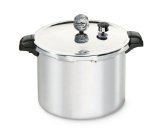 With pickles, jams, jellies, and some salsas a water bath is all that is needed to process the jars, this is due to the preservative nature of sugar or the natural acidity of the recipe. Once you have mastered water bath canning, it’s time to invest in a pressure canner. I bought the a Presto 16 Quart Pressure Cooker / Canner last year and have been slowly practicing with their provided recipes. This isn’t the exact model I have, mine did not come with a gauge, but mine seems to have been replaced with this model.
I’m just dipping my toe into the water of home preservation, but there are many other models to choose from:
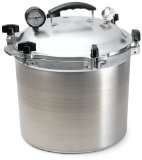 I have heard good things about the All American line of pressure cookers, such as this 21 1/2 quart pressure cooker / canner, but as a beginner I couldn’t justify the investment.
With a pressure canner your ability to preserve foods increases dramatically. All of the safety precautions you learned with water bath canning still apply. You must use sterile jars and new lids. The bands should still be finger tight. The pressure canner itself brings another set of safety concerns, always check the seal for wear and make sure the vents are clear.
Remember canning soups, vegetables, and meat does have its drawbacks:
- Foods lose some nutrients through processing.
- Jars are bulky.
- It’s time and labor intensive -this is especially true for new canners- after doing it a few times it’s easier to find the rhythm of work.
That said there are also some great benefits to canning your own vegetables, soups, and meat.
- After the initial investment has been recouped (this can take a couple of seasons) canning becomes an inexpensive preservation method.
- You gain complete control over what is in your food.
- There is some concern over the BPA levels of canned tomatoes. By canning your own tomatoes you virtually eliminate this risk.
Unless power outages are a frequent concern in your area, if I had a plentiful harvest from my garden, I would freeze produce first and can the remainder.
Here are some useful resources to help you get a safe start with pressure canning. Presto has a great list of pressure canner recipes and references. The National Center for Home Preservation is a useful website and they are trying to update. Your county’s cooperative extension may offer classes in home preservation for free or for very low cost. It’s worth looking them up and giving them a call to see what is offered in your area. This program may be one of our most under-utilized assets. When trying new recipes for pressure canning, it’s very important to ensure it meets the guidelines for safe preservation. Variations in seasonings are usually not an issue, watch for processing times that vary widely from standard recipes for the particular ingredients.
Good luck!

I spent all day yesterday freezing tomatoes. I plan to blanche and freeze some green beans today. Thanks for this info! I still feel a bit intimidated by canning, even though I've done it before with my mom. I wish she lived close enough to help me with all these tomatoes! 🙂
I find canning a lot easier if I have company. Sometimes this means begging a friend just to come hang out while I work. Other times I have to suck it up and make do with my favorite pod casts. Setting up the work area and getting rid of interruptions are probably key to success. With super young kids in the house, I wold only attempt to can if someone was around to wrangle them, otherwise it goes without saying that someone's bottom would need to be wiped at a critical moment.
I have a food dehydrator and have been slowly learning how best to use it. My best successes so far have been carrot chips and dried apples. I think because of the humidity here, I have to make sure foods are drier than I think they should be in order to be shelf stable. Both of those make great nutrient-rich snacks.
For the freezer, I like to have veggies that can be served alone or in soup/stews. Okra, tomatoes, corn, green beans. I also freeze berries to be used in homemade smoothies.
I love the feeling of having a well stocked freezer!
We also can fruit butters, though they probably go into the same category as jams and jellies.
We dehydrate tomatoes (they taste like sun-dried, yum!) but the finished product doesn't last long. You have to keep it in the fridge and it spoils in about a month.
We freeze apple sauce.
I guess I didn't have much to add. Sorry!
You can vacuum seal and freeze dried or slow roasted tomatoes and they will keep for a long time. They are wonderful. I need to go ahead and get a dehydrator, I have some produce that is getting tossed today. I feel bad, but I just could not get to it.
I prefer canning over freezing for some things, specifically tomatoes and stocks – I prefer to keep the freezer free for other, non-cannable food (or, stuff that's less desirable to can, like meat and green beans!). It's not difficult, really, and I love that the foods are right there and ready to use. (No waiting for that container of chicken stock to thaw enough to scrape out a cup!)
I use the All American pressure canner you referenced above, Heather, and I think it's paid for itself several times over in the 5 years since I bought it. The manual that comes with the canner, in addition to Ball's Blue Book, are great resources, FYI.
The Ball book is invaluable! I wish I knew where mine went. I'm still building up my jar and band stash, a little more every year and eventually I'll be able to downgrade to replacement mode.
I really want to can soup, I know my albondigas – /clear-my-head/ is a great candidate for canning, but I have yet to muster the energy and drive to pull it off.
My brother just bought one of the pressure cookers you are talking about…it was on Craig's list, used but still in very good shape for $25.00. Being frugal can really add to the enjoyment of setting up your emergency pantry!!
I enjoy canning with my pressure cooker. Yesterday afternoon I put up several pints of green beans and potatoes. I am hosting a "Canning Week Blog Party" August 23-27th. I hope to get more woman interested in canning by posting tips, recipes, and of course give-a-ways. Hope you can stop by and contribute!!!
I may be on the road that week, but if not, I'll be sure to stop by. It sounds like a great idea, thank you for the heads up.
I definitely – absolutely – with no reservations recommend the All American canner. I bought mine years ago after I received a severe burn when another type of canner exploded. The All- American has worked perfectly for me ever since – and I can hundreds of jars of produce every summer. Read the directions and be careful and you'll do just fine.
Also – don't overlook canning meats. Pressured canned beef, pork, poultry and venison are a great way to keep protein on the shelf. They also make up a fast and tasty meal!
Great article! The only kind of canning I've ever tried is regular water bath canning. I never really considered pressure canning. You've given me some great ideas!
LOL, okay ladies, now I want to buy a pressure cooker and start canning…I only wish I had the room!! Of course I guess since I'm not buying any of the canned products at the supermarket I'll just refill the shelf with "homemade"! Right now my borther cans and I freeze, guess I'll have to look on Craig's list myself!! I have to do it though, I don't buy anything with artificial anything in it, I have been finding out so much bad news about our food supply that it literally makes me sad, it's like they are poisoning everyone slowly, much better to do it yourself!! Did you ladies know for instance that if a label doesn't specifically say which spices are being used they can get away with saying "spices" and be putting MSG in it?? Sad isn't it?
You may need to get very creative with their food storage. Putting a bed on risers and using that space is a pretty popular option. Another is to clean out a linen or coat closet and use that space.
I want to clear up one little thing about MSG. You're right that it can be hidden under other ingredient terms, but it cannot be hidden under spices. I dug pretty deep into the US's Federal Regulations on Food Labeling. You can see all the other names in this post: /food-labels-controversy…